Finding My Voice Without Losing My Tribe

I’ve always been a bit of a people-pleaser. There, I said it. Growing up, I learned early on that keeping the peace meant keeping everyone happy. Everyone being; my family, my friends, even the random acquaintance who most would think didn’t deserve a second thought.
But there’s a cost to that silence, isn’t there?
That homeless man outside your car window presents a choice: engage with him by giving him the quarter from your dash or turn a blind eye and pretend he doesn’t exist. In these moments, we make subtle decisions.

A quiet erosion of self that happens when you swallow your truth to avoid rocking the boat.

For years, I wrestled with this tension: how do I speak up without risking the relationships that anchor me? How do I honour my voice without losing the people I love? How do I speak up and tell my truths without risking losing my good image? People don’t always make us feel like we are safe to be ourselves or express ourselves; regardless of whether it’s our past or present. Its a conversation most are scared to talk about.

This question has haunted me through countless late-night journal entries and whispered conversations with myself. So, when I listened to the July 1, 2025, episode of Jay Shetty’s “On Purpose” podcast featuring Africa Brooke, I felt like someone had finally handed me a map to navigate this messy terrain. Brooke’s insights, paired with Shetty’s thoughtful probing, cut straight to the heart of what it means to belong today; and what we’re willing to sacrifice for it.
Today, I’m diving into their conversation, pulling out the lessons that hit me hardest, and weaving them into my own story of learning to speak up. Because if there’s one thing I’ve learned, it’s that silence isn’t safety; it’s just a slower way to lose yourself.
The Ancient Pull of Belonging
Let’s start with a truth that stopped me in my tracks while listening to the podcast. Brooke points out that this struggle of wanting to speak up but fearing the consequences; isn’t some modern-day predicament born of social media or cancel culture. It’s deeper than that, woven into the very fabric of who we are as humans. As she puts it:
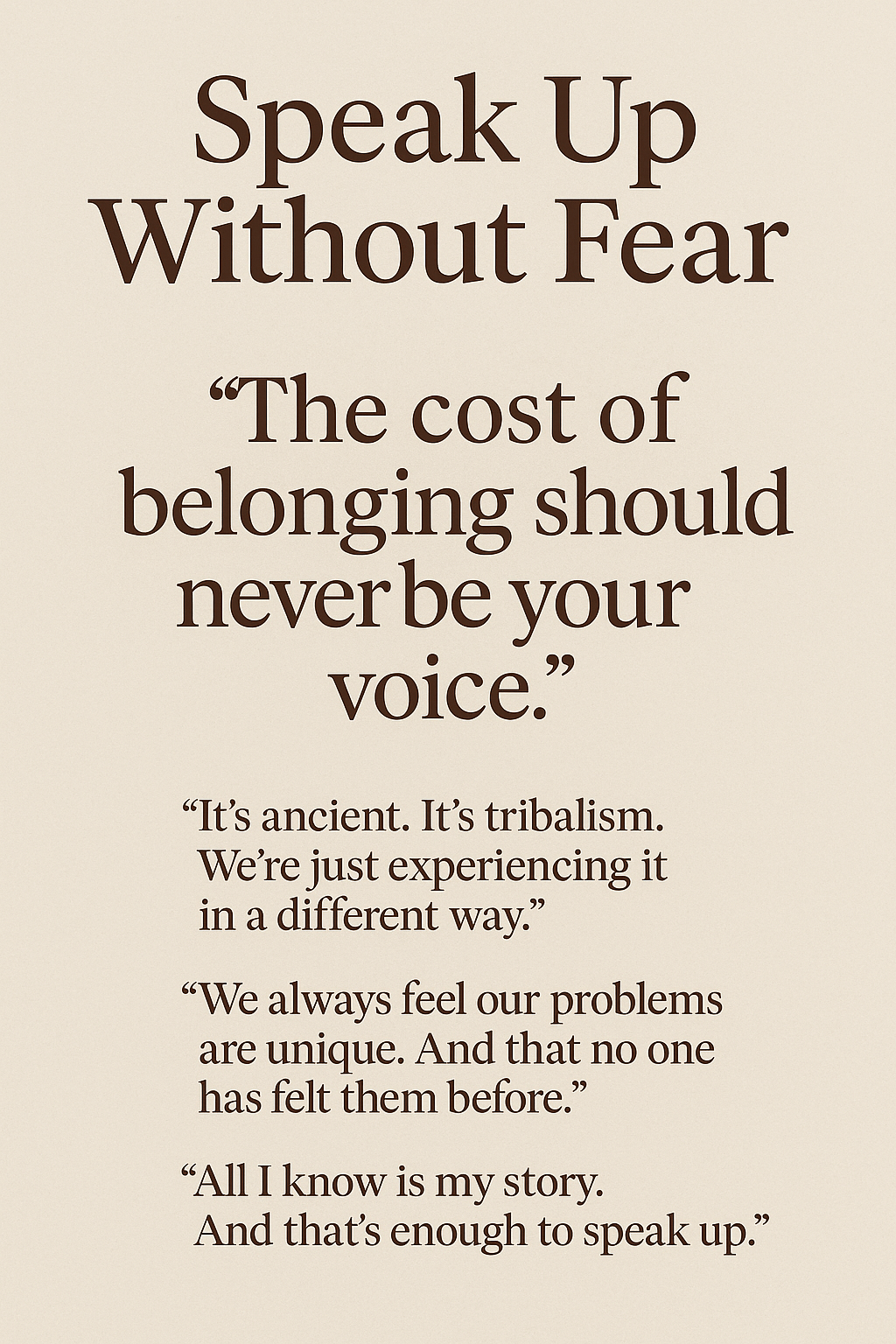
It’s not a new problem. So I can’t say this is exactly when it started. It’s ancient. It’s tribalism.
tribalism; hit me like a brick. I thought about my own life, the way I’ve clung to certain relationships not just out of love, but out of a primal need to belong.

Back in the day, being part of a tribe meant survival. To be cast out was to face the wilderness alone, vulnerable to predators and the elements. Today, that wilderness looks different; it’s the loneliness of a friend group chat going silent, the sting of a family member’s disapproval, or the dread of being misunderstood.
But the fear? It’s the same. Brooke’s words reminded me that this instinct to stay quiet, to conform, isn’t a personal failing; it’s a survival mechanism hardwired into us. And yet, as she also notes, just because it’s ancient doesn’t mean we have to let it rule us. The problem of fear in speaking up may be rooted in tribalism, but it manifests differently in our modern world, and we have the power to challenge it.

I think about the times I’ve bitten my tongue; during family dinners when a relative’s offhand comment scratched against my values, or in friendships where I’ve gotten around hard truths to keep the vibe “chill.” Each time, I told myself I was preserving something sacred. But was I? Or was I just preserving my own comfort, avoiding the risk of being seen as “too much” or “difficult”? Brooke’s insight made me realize that belonging is a fundamental human need, but we shouldn’t normalize situations when it doesn’t work and when staying silent becomes the price of admission. That’s not belonging; that’s bondage.

The Illusion of Unique Pain
Another moment from the podcast that shook me was when Brooke and Shetty touched on how we often feel isolated in our struggles. I’ve been there, convinced that no one else could possibly understand the knot in my chest when I think about speaking my truth. But listen to this exchange:
We always feel our problems are unique. Yeah, we do. And that no one has felt them before.
Reading that, I had to pause the episode. How many times have I sat in my own head, replaying scenarios where I could have said something but didn’t, thinking I was the only one wrestling with this fear? I remember a specific moment from a few years back, sitting across from a close friend who was going through a rough patch. I wanted to tell her that her choices were hurting me, that I felt sidelined and unseen. But I didn’t. I smiled, nodded, and let the moment pass, all while feeling like I was carrying the weight of the world. I thought no one else could relate to that ache; the fear of losing her if I spoke up.
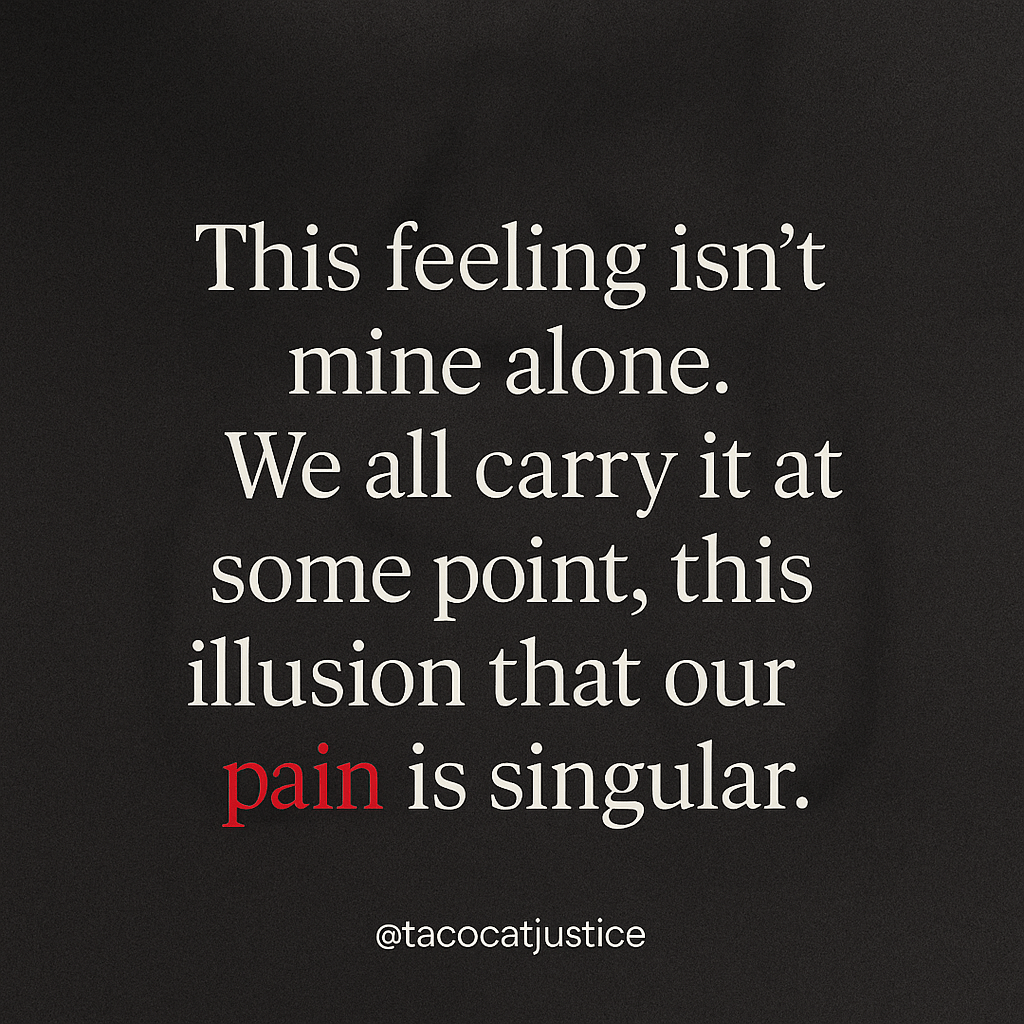
Yet, Brooke’s words reminded me that this feeling isn’t mine alone. We all carry it at some point, this illusion that our pain is singular .
What struck me even more was how this realization can shift us toward empathy. Brooke elaborates on this beautifully:

That line made me think about the people I’ve held back from—not just out of fear for myself, but out of a narrow focus on my own narrative. What if I’d considered that they, too, might be scared? That they might be holding back their own truths? Understanding that everyone has their own story, their own experience, can foster a connection that makes speaking up feel less like a risk and more like an invitation to grow closer . It’s not about confrontation; it’s about shared humanity. I wish I’d known that sooner.
My Own Journey: Learning to Speak
Let me take you back to a turning point in my life, one that ties directly to this idea of speaking up without fear. A few years ago, I was in the middle of a personal transformation/shedding old identities, grappling with who I wanted to become. (If you’ve read my memoir drafts, you’ll know this is a recurring theme in my writing.)
During that time, I faced a situation with a family member whose words often left me feeling small.
For years, I’d let it slide, telling myself it wasn’t worth the fight. But one day, something snapped. I couldn’t carry the weight of unspoken hurt anymore. So, I spoke up; not with anger, but with honesty. I told them how their words made me feel, how I wanted to be seen differently.
I won’t lie; my heart was pounding. I was terrified they’d pull away, that I’d fracture something irreparable. But here’s what happened: they listened. They didn’t fully understand at first, and there were awkward silences, but they didn’t walk away. Over time, that conversation opened a door to deeper understanding between us. It wasn’t perfect, but it taught me something vital: speaking up doesn’t always mean losing people. Sometimes, it means redefining the relationship on terms that honor both of you.
This experience echoes what Brooke and Shetty discuss in the podcast. They discuss the idea that empathy grows when we realize others have felt similar struggles . I had to step outside my own story to see that my family member wasn’t trying to hurt me; they were just navigating their own insecurities. Speaking up became less about defending myself and more about building a bridge. It’s a lesson I’m still learning, but it’s one I carry into every hard conversation now.
Practical Steps to Speak Up Without Fear
So, how do we do this? How do we find the courage to voice our truth without the paralyzing fear of losing those we love? Drawing from the podcast insights and my own stumbles, I’ve put together a few steps that have helped me—and might help you, too.
- Start Small, Build Trust: You don’t have to dive into the deepest, most vulnerable truths right away. Begin with smaller conversations; express a preference, share a mild disagreement. Test the waters and see how the other person responds. I’ve found that these small moments build a foundation of trust, making the bigger conversations less daunting.
- Frame It with Empathy: Remember Brooke’s point about everyone having their own story . When you speak up, frame your words with an acknowledgment of the other person’s perspective. I’ve started using phrases like, “I know you might not have meant it this way, but here’s how I felt.” It shifts the tone from blame to understanding.
- Accept the Risk, But Don’t Dwell on It: Yes, there’s always a chance that speaking up could strain a relationship. But as Brooke suggests, we shouldn’t normalize situations where belonging requires silence . Accept that risk, but don’t let it paralyze you. Focus on the potential for growth instead.
- Reflect on Your Why: Before you speak, ask yourself why this matters. Is it about asserting a boundary? Seeking understanding? For me, connecting this to my broader journey of personal growth (a theme in my memoir work) gives me clarity and courage. When I know my “why,” the fear feels smaller.
The Bigger Picture: Redefining Belonging
As I reflect on Brooke’s words and my own path, I keep coming back to this idea of redefining belonging. For so long, I thought belonging meant fitting in at any cost or molding myself to others’ expectations, staying quiet to keep the peace. But the podcast reminded me that true belonging isn’t about conformity; it’s about being seen for who you are, even when your voice shakes. It’s about creating relationships where speaking up isn’t a threat, but a gift.
Brooke’s insight that this fear is ancient, tied to tribalism, helps me forgive myself for the times I’ve stayed silent . It’s not weakness; it’s wiring. But we’re not cave-dwellers anymore. We have the tools; empathy, communication, and self-awareness to rewrite the rules. And her reminder that we often feel our problems are unique challenges me to look beyond my own story, to connect with others through shared struggle . That’s where the magic happens.

I’m still on this journey. There are days when fear creeps in, whispering that my words will cost me everything. But I’m learning to trust that the people who truly love me and, the ones worth keeping, will stay, even if my truth makes them uncomfortable at first. And if they don’t? Well, maybe that’s a sign I was clinging to the wrong tribe all along.
So, here’s my invitation to you: speak up. Start small if you need to, but start. Say the thing you’ve been holding back, not with the goal of winning, but with the hope of being known. Because in the end, the risk of losing someone pales in comparison to the risk of losing yourself. I’ve been there, and I’m telling you, your voice is worth it.
Sources
[1] Projects projects.memoir_writing
Jay Shetty Podcast 7/1/2025
 The Taco Cat - Kept Knowledge
Leave a comment